
A cacao ritual: choosing Amaru or Uturunku
“We are the ceremony. We are the ritual. Cacao and yoga are the tools.”
I wrote these words in 2023, while exploring the place of cacao in my morning practice. They feel like a useful place to begin here, too. Rather than starting with what a ritual should look like, we can begin with a question: What nourishes me today?
Some days that might be movement. Other days, the ink of a pen on paper. There can also be days when cacao isn't what you need. The practice doesn't have to stay the same to be meaningful.
Amaru: when you feel drawn to movement
In my own practice, Amaru Ceremonial Cacao has accompanied a more physical expression: dancing, movement, and time with the body. If you're looking for an energising ritual, this is where I would begin.
Make your cup before a morning movement practice, or when you want to leave the screen and give yourself space to move. Sit and sip first. Notice the ground beneath you and how your breath is moving, without needing to change it. Then let movement begin simply. A stretch, a sway, a walk. There isn't a particular shape you need to find.
Uturunku: when you feel drawn inwards
Uturunku Ceremonial Cacao is its own indigenous type of cacao, native to Peru. It is the cacao I reach for when writing, accompanying that gentle turning of my attention inwards.
Choose it for a grounding ritual: a quiet morning, a pause with your journal, or time to sit without filling the space. You might begin writing after your first sip, or wait until you've finished your cup.
If a starting point helps, try: What is my relationship to slow? Or, In this moment, I need… Let what arrives be enough. You don't need to turn it into an answer.
Choosing between them
Amaru for movement, Uturunku for inward attention is a way into the ritual, not a rule about how either cacao will make you feel. The energising and grounding descriptions reflect the practices and experiences associated with them, not proven, predictable differences in their effects.
You might find yourself drawn to either cacao for either practice. Or a blend of both. Let there be room for that, and for your experience to be different from mine, and for it to change each time you meet it.
Preparing your cup
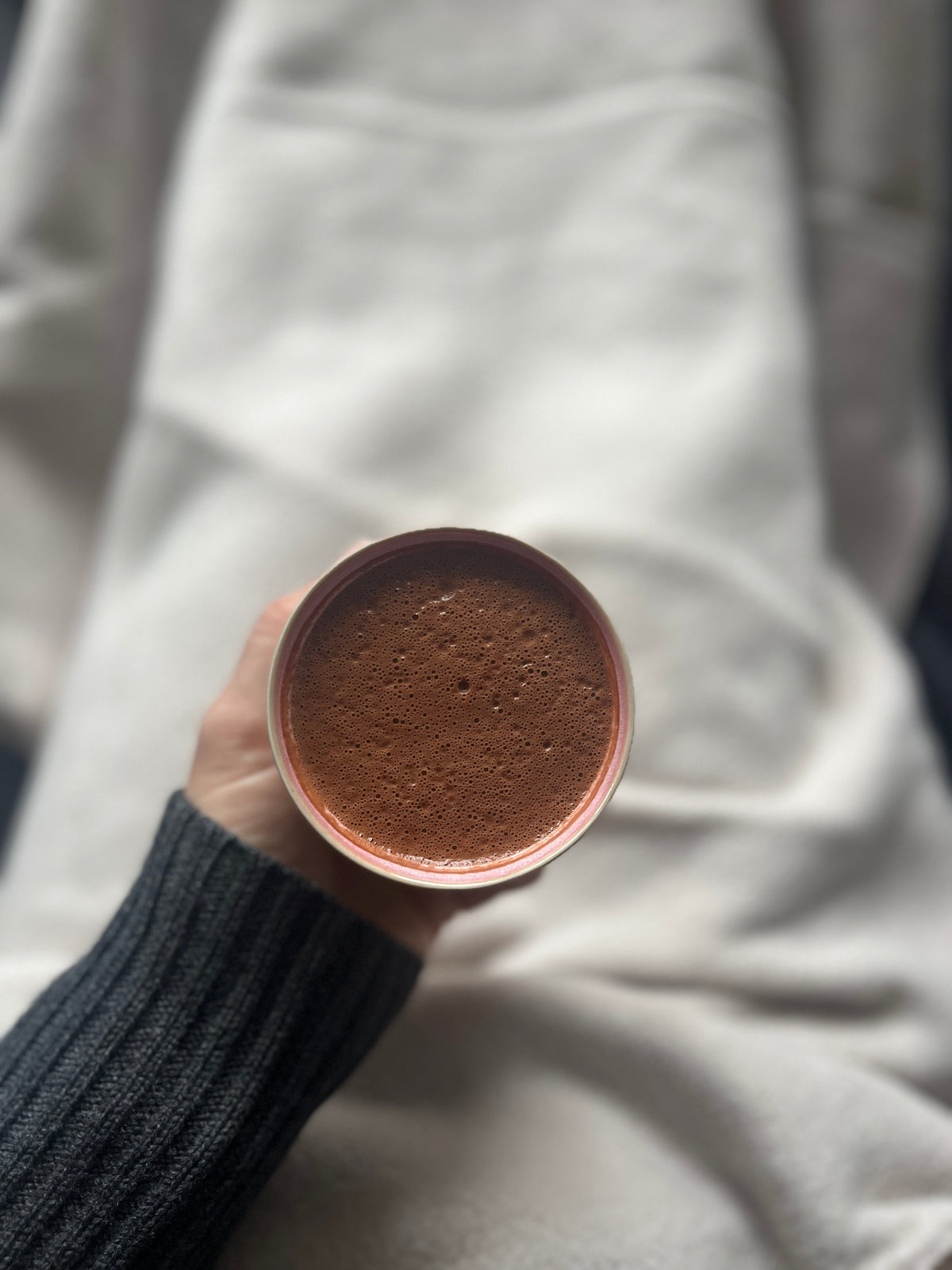
My preparation is simple: cacao, near boiling hot water, and sometimes a little sweetness or spice.
For one cup, use a cup of hot water and your cacao, following the packet's serving guidance. If you're new to cacao, begin with a smaller serving within that guidance.
- Shave or finely chop your cacao. Take your time with this part. It can be the beginning of the pause, rather than something to hurry through.
- Add the hot water.
- If you like, sweeten with a little maple syrup, honey or a date, just enough to keep some of the bitterness.
- Add any spices that appeal: rose, vanilla, cinnamon, cayenne or ginger. Or leave it just as it is.
- Blend everything together until smooth, or whisk by hand with a molinillo.
- Pour, settle, and take your time. Notice the support beneath you and how your breath moves. You might acknowledge the people and places behind your cup.
This is a personal home practice, not a claim to teach an Indigenous ceremony. There is more to cacao's cultural roots than a recipe can hold. I approach that learning with respect and a willingness to listen.
Give the ritual a closing
I compare integrating cacao to savasana: allowing space for what has happened to land. A closing doesn't need to be elaborate. After writing or moving, sit for a moment before reaching for your phone or beginning the next thing.
Notice what is here, without deciding that something special should have happened. You might write a final line, put your cup away, or simply pause. The beginning, the in-between and the closing can take their own shape.
A little care with cacao
Cacao contains caffeine and theobromine. The amount in your cup depends on the product and serving size, and people respond differently. A grounding intention doesn't make a drink stimulant-free. If you're sensitive to caffeine, consider the other caffeine you've had that day and keep your ritual earlier if cacao affects your sleep. Stop if it makes you feel unwell.
If you're pregnant or breastfeeding, take regular medication, or have a health condition that could make stimulants unsuitable, ask your clinician or pharmacist whether cacao and your intended serving are appropriate. Check the packet's ingredients and allergen information as well. Choosing a smaller amount isn't a substitute for that advice.
If you're choosing your first cup, begin with the practice you're drawn to: Amaru for a movement-led ritual, or Uturunku for time with your journal. Then make room to notice your own experience.
Adapted from my 2023 Yoga and Cacao conversations with Contemporary Yoga: Practices of Homecoming, We are the Ceremony, Learning the Spirit of Cacao, and Integrating Cacao.